“Many participants noted that ongoing strong demand for AI infrastructure would likely sustain upward pressure on prices for technology products and electricity.”
That line from the Federal Reserve’s June meeting minutes captured a shift that Wall Street is only beginning to price.
Artificial intelligence was sold to investors as a productivity revolution. For the Fed, it is increasingly looking like a demand shock that may arrive well before the efficiency gains.
The AI boom has already transformed equity markets, pushed Big Tech capital spending to historic levels and revived animal spirits across technology shares.
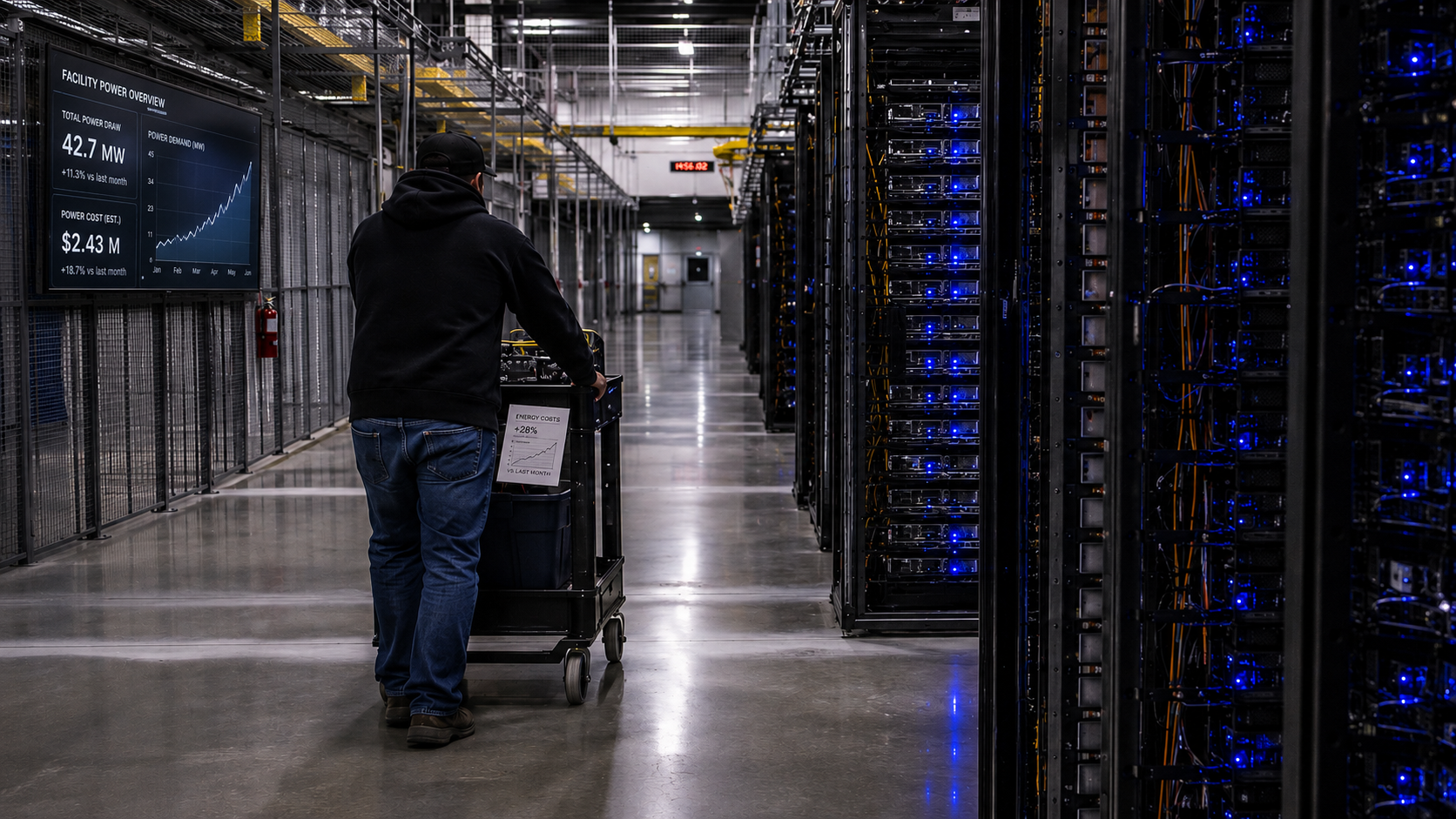
But the same boom is also increasing demand for data centres, chips, electricity, cooling systems, construction labour, land, debt financing and high-end services.
The pressure is beginning to reach consumers. Apple recently raised prices across several products after blaming soaring memory and storage costs partly on demand from AI data centres.
That creates a sequencing problem for policymakers. The costs are visible now. The productivity gains may take years to spread across the economy.
For a central bank still trying to return inflation to its 2% target, the difference matters.
If AI keeps demand hot, lifts electricity prices and supports asset values, the Fed may have less room to ease policy. In a more hawkish scenario, it may even have to raise rates again.
US consumer inflation eased in June, with the all-items CPI rising 3.5% over the year, down from 4.2% in May.
Core CPI, which excludes food and energy, rose 2.6% over the year, compared with 2.9% in May.
But the Fed’s concern is not only where inflation is today, but whether new forces are emerging that could stop disinflation from becoming durable.
AI’s sequencing problem
Diane Swonk, chief economist at KPMG Economics, said the AI boom has created precisely that timing mismatch.
“AI has a sequencing problem. The costs and the wealth effects are faster than productivity can be scaled,” Swonk told Invezz.
The result is adding to both inflation via electricity costs and spillover effects now in consumer electronics, but in the service sector as well due to the wealth that is being spent – try going to a live sporting event or concert.
That framing is important because it moves the AI story away from the usual debate over Nvidia, cloud margins and software revenue. It puts AI inside the Fed’s inflation model.
The demand side is easy to see as hyperscalers are building data centres at speed and chip demand remains intense.
Utilities are being forced to rethink load forecasts. Real estate markets around data-centre hubs are changing. Skilled labour is being pulled into power, construction and infrastructure projects.
Corporate bond markets are being asked to finance a larger share of the buildout.
The supply side is less visible. AI may help companies write code faster, automate routine tasks, compress back-office costs and increase research output.
But those gains need adoption, integration and business-process change. They do not automatically appear in productivity data the moment companies buy GPUs.
That is the Fed’s challenge. Monetary policy cannot be built on a productivity boom that has not yet arrived in the data.
“The Fed cannot afford to wait for the productivity growth to scale to deal with the additional boost to inflation due to the AI boom,” Swonk said. “We expect two rate hikes in the back half of the year.”
The June Fed minutes showed that this concern is not isolated. Participants said inflation had increased further and remained well above the Fed’s objective, citing tariffs, supply-chain disruption linked to the Strait of Hormuz and demand strength in some goods and services related to AI investment.
The minutes also said strong AI business investment could contribute to more persistent inflationary pressure if economic activity runs above potential output.
From productivity dream to inflation channel
For much of the AI rally, the macro case was simple. AI would lift productivity, improve margins and help suppress inflation by allowing companies to produce more with fewer resources.
That argument has not disappeared. It remains the long-term bull case for AI and for equity valuations tied to it.
But central banks operate in real time and must respond to the economy as it is, not as investors expect it to look after the technology is fully absorbed.
Fed Vice Chair Philip Jefferson made that timing issue explicit in a July 16 speech. He said AI could affect both supply and demand, with firms investing heavily in data centres, advanced computing equipment and AI capabilities.
He added that if stronger investment and consumption appear before productivity gains, AI could put upward pressure on inflation; if productivity lowers costs sooner, the effect could be disinflationary.
That is close to the heart of Swonk’s argument. AI may be disinflationary eventually, but it can still be inflationary first.
Electricity is the cleanest example. A surge in data-centre power demand does not just raise costs for the companies training AI models, but also affect grid investment, utility planning and power prices for other users.
Technology hardware is another channel.
If demand for chips, servers, networking equipment and memory keeps rising faster than supply, prices can stay firm even as other goods cool.
Then there is the wealth effect. AI has lifted market capitalisation across a narrow group of mega-cap technology companies and helped support broader equity sentiment.
Higher asset prices can support spending, especially among higher-income households. The June minutes also noted that high equity prices, driven by strong earnings and AI optimism, had supported demand.
Swonk sees that as part of the inflation story.
“Some of the most hawkish members of the Fed have referenced the additional pressure on inflation due to the broader AI boom, including wealth effects,” she said.
Wall Street is already repricing the buyers
The pressure is also visible in markets. The first phase of the AI trade rewarded the companies selling picks and shovels: chipmakers, equipment suppliers, power-exposed names and infrastructure plays.
The next phase is more uncomfortable. Investors are scrutinising the companies writing the biggest cheques.
Gil Luria, managing director at D.A. Davidson & Co., said that process has already begun.
“The pressure on the markets is happening right now, as investors devalue the buyers of AI equipment,” Luria said while speaking to Invezz.
That line is central to the Wall Street story. Microsoft, Amazon and Google are not only AI beneficiaries, but also the companies absorbing much of the cost of the AI buildout.
They must spend heavily before investors can fully judge the return on that spending.
If rates rise or stay high, the bar for those returns rises too. Future cash flows are discounted more heavily. Long-duration technology valuations become harder to defend.
Credit investors also become more sensitive to debt-funded capital expenditure, especially if AI infrastructure spending keeps expanding.
Luria, however, does not see the spending as merely speculative.
“We believe AI is starting to show returns as the combined revenue run rate of Anthropic and OpenAI is already at over $75 billion run rate, from almost zero just two years ago,” Luria added.
That trend would have to continue for the investment to be worthwhile, but that seems more likely than not. Which is why those buyers of AI equipment, Microsoft, Amazon and Google, are likely to continue investing in data centers.
That is the counterweight to the inflation scare. If AI revenue is scaling fast enough, Big Tech may keep spending even as investors worry about margins and rates.
That would support the long-term AI thesis, but it could also prolong the near-term demand impulse the Fed is watching.
In other words, the bullish technology argument and the hawkish macro argument can both be true. AI can be commercially real and still inflationary in the short run.
The Fed cannot ignore inflation muscle memory
The AI debate is arriving after years of above-target inflation. That context makes the Fed less willing to wait patiently for supply-side benefits.
“The context is important as well,” Swonk said. “We are five years in and counting on the post-pandemic surge in inflation.”
There are many reasons for that, but the fact that it is normalizing inflation and creating a muscle memory on price hikes is important. The Fed was not to blame for all of it, but it is the only institution charged with derailing inflation, which is a highly regressive tax.
That “muscle memory” point may matter as much as the data-centre story. After years of volatile input costs, tariffs, energy shocks and supply disruptions, businesses may be more willing to test price increases.
Consumers may be more accustomed to them. Wage and price setting can become less anchored, even if headline inflation improves for a month.
The Fed minutes made a similar point, warning that after several years of inflation above 2%, continued elevated inflation could begin to affect inflation expectations and wage- and price-setting decisions.
That is why AI’s timing matters. If it arrives as a productivity shock in a low-inflation economy, the Fed can welcome it.
If it arrives as a spending boom in an economy still scarred by inflation, the reaction is different.
The productivity counterargument
The strongest counterargument is that the productivity gains are already forming but remain hard to measure.
AI tools can increase output in software development, customer service, research, marketing and finance long before the macro data fully capture the change.
Fed officials are not dismissing that possibility. Jefferson said AI will likely lead to significant productivity gains by automating some tasks and augmenting workers’ ability to do others.
Governor Michael Barr has also described generative AI as increasingly likely to become a general-purpose technology, while noting that timing mismatches in investment and business integration could limit the near-term payoff.
That is the optimistic path for markets. If AI productivity shows up quickly, it could offset the cost pressures from data centres and chips.
It could raise potential output, support margins and allow the Fed to look through some of the near-term investment surge.
The Fed’s problem is one of evidence that productivity is difficult to observe in real time, while inflation is not.
That asymmetry makes policymakers cautious. If they wait for productivity to solve the problem and it arrives late, inflation expectations could become harder to control.
If they tighten too much and productivity arrives quickly, they risk slowing an economy that was about to become more efficient.
The market risk: fighting inflation could burst the AI trade
The final dilemma is financial stability. The Fed can fight inflation with higher rates, but AI optimism has helped push equity markets to valuations that look vulnerable to any increase in discount rates.
Swonk flagged that risk directly.
“The one caveat is that rate hikes up the risk of bursting what looks frothy in broader equity markets,” she told Invezz.
Those hit hardest are those who can afford it the least. We have 55% stock ownership, which is high but it is also highly concentrated in the top1% of earners.
That is a difficult trade-off. Higher rates could cool demand and restrain inflation, but they could also hit the very market rally that has been supporting confidence and spending.
A sharp fall in AI-linked equities would tighten financial conditions quickly. It could also expose how much of the broader market’s strength has depended on a narrow group of companies tied to the AI buildout.
For Wall Street, this is why the AI inflation story matters.
It is not simply about whether ChatGPT makes workers more productive or whether Nvidia sells more chips, but whether the AI boom changes the rate path.
If AI spending keeps inflation sticky, Treasury yields may stay elevated. If yields stay elevated, technology valuations face pressure. If valuations fall, wealth effects weaken. And if the Fed has to hike into a frothy market, the adjustment could be abrupt.
The AI boom was supposed to make the economy more efficient, but the Fed may first have to decide whether it is making the economy too hot.
The post How Wall Street’s AI boom is becoming the Fed’s next inflation problem appeared first on Invezz